
If you work in a lab, you know how essential it is to accurately separate and identify ions in complex samples. Ion chromatography offers a reliable way to do just that, using ion exchange resins and carefully chosen mobile phases. But mastering this technique means understanding its principles, equipment, and potential pitfalls. Before you delve into your next analysis, it’s worth exploring how to optimize every step for consistent, high-quality results.

Ion Chromatography: Principles and Processes
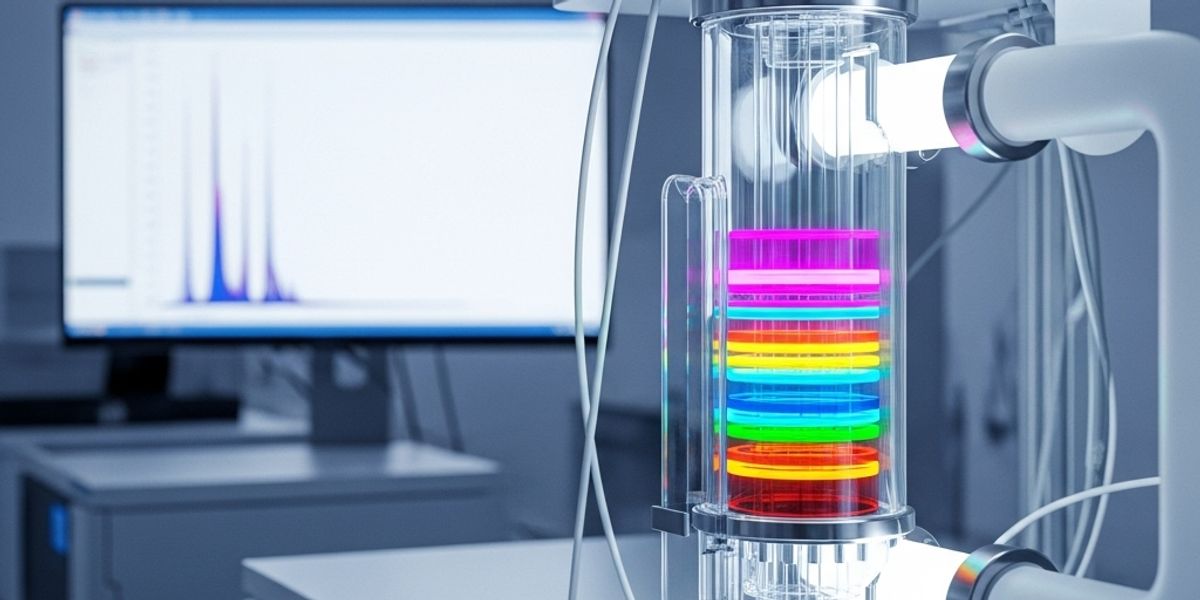
How does ion chromatography separate charged particles so effectively? You rely on its clever use of ion exchange resins inside a column. These resins carry opposite charges that attract and temporarily hold ions from your sample.
When you pass a liquid called the mobile phase through the column https://laballiance.com.my/, ions compete to stick to the resin based on their charge and size. Because each ion interacts differently, they travel at unique speeds and exit the column separately.
You then detect and measure these ions with sensitive detectors. This process gives you the freedom to analyze complex mixtures precisely, without interference.
Common Applications of Ion Chromatography
Where can ion chromatography make the biggest impact? You’ll find it invaluable in water quality testing, ensuring safe drinking water by detecting harmful ions like nitrates and chlorides. It’s your go-to for environmental monitoring, tracking pollutants in soil and wastewater.
In food and beverage industries, you rely on it to verify ingredient purity and safety. Pharmaceuticals benefit too, as ion chromatography helps you guarantee drug formulations meet strict standards.
Plus, it’s essential in chemical manufacturing, letting you control raw material quality and final products. With ion chromatography, you gain precise, reliable data that frees you to focus on innovation and problem-solving.
It’s a versatile tool that empowers your lab work, making complex ion analysis straightforward and routine.
Essential Equipment and Instrument Setup
What tools do you need to get started with ion chromatography? Setting up your system involves a few key components that guarantee smooth operation and accurate results.
First, you’ll want reliable pumps to maintain consistent flow rates.
Next, the injector allows you to introduce your sample precisely.
Finally, a sensitive detector helps you identify and quantify ions effectively.
- High-pressure pumps for steady eluent delivery
- Automated sample injector for repeatable injections
- Conductivity or UV detectors for ion detection
How to Choose the Right Columns and Eluents
Selecting the right columns and eluents can make or break your ion chromatography results. You want columns that match the ions you’re analyzing—anion or cation exchange columns, with appropriate resin types and particle sizes, offer the selectivity and resolution you need.
Don’t overlook the column’s capacity; it should handle your sample load without sacrificing performance. When choosing eluents, pick ones that provide good ionic strength and pH control, ensuring the ions separate cleanly.
Consider compatibility with your detector and system pressure limits. You have the freedom to tailor these choices based on your sample matrix and target ions.
Optimizing Ion Chromatography Performance and Troubleshooting
Matching the right columns and eluents sets the foundation, but maintaining peak ion chromatography performance requires ongoing attention and fine-tuning. You’ll want to regularly monitor system pressure, check for peak shape changes, and verify retention times to catch issues early. Troubleshooting becomes easier when you stay proactive.
Focus on these key steps to optimize your setup:
- Clean and maintain columns to prevent contamination and maintain resolution
- Adjust eluent concentration or flow rate to improve separation or shorten run times
- Check for leaks or blockages in the system that can affect pressure and signal quality
Conclusion
Now that you understand ion chromatography’s principles, applications, and equipment, you’re better equipped to choose the right columns and eluents for your needs. Remember, optimizing performance and troubleshooting are key to getting accurate, reliable results every time. With careful attention and practice, you can confidently use this powerful technique to analyze complex mixtures and guarantee quality in your lab work. Keep refining your skills, and ion chromatography will become an invaluable part of your toolkit.